Vital Forces: A Conversation with Badara Ndiaye


Q&A Series, Issue No.1
I have been following Badara Ndiaye for a few years on Instagram and have always been in awe of his transformative artworks and impeccable style and language, a rare combination.
I caught up with Badara in the middle of preparing for his very first exhibition titled "Voyage" in Mexico City this month. Following an artist residency in Mérida, Ndiaye will make his debut at Alejandra Topete Gallery starting 10th September.
Before we dive into this Q & A session, here is what you need to know. Badara Nydiaye is a Senegalese-American Creative & Brand Positioning consultant and multidisciplinary artist, born in Kaolack and now splitting his time between Paris and Miami Beach.
Before becoming a professional artist, he was a college basketball Power Forward at Florida International University, a career cut short by a knee injury that required microfracture surgery.
Discovered by a fashion photographer during his recovery, he pivoted into modeling and creative direction, later taught at Parsons School of Design in Paris and New York, and eventually found his way to painting first on clothing and everyday objects.
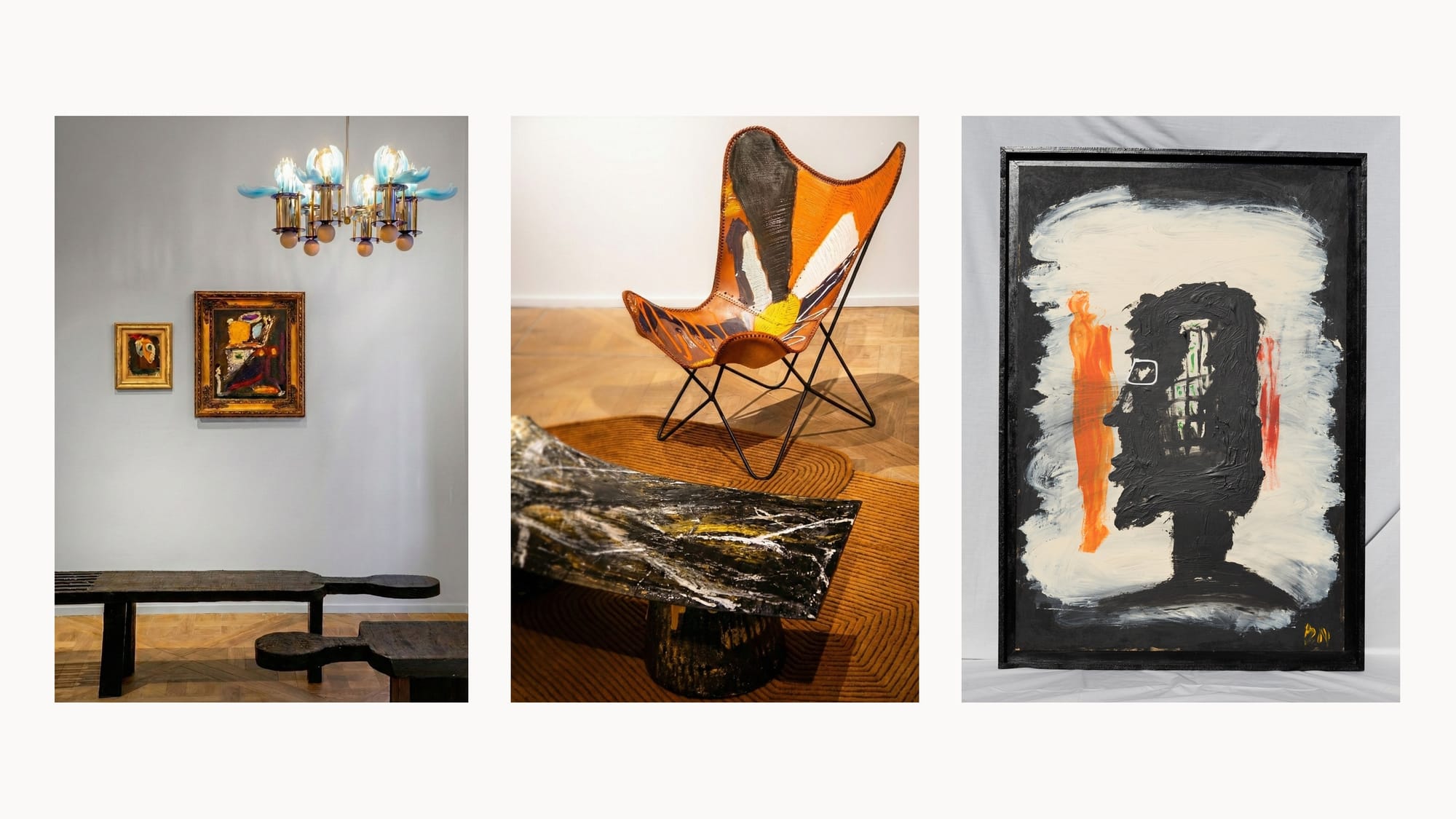
Today, he is represented by Galerie BSL in Paris and Alejandra Topete Gallery, in Mexico. Ndiaye works across painting, sculpture and design, creating expressionist, gesture-driven pieces on recycled wooden panels and baroque frames.
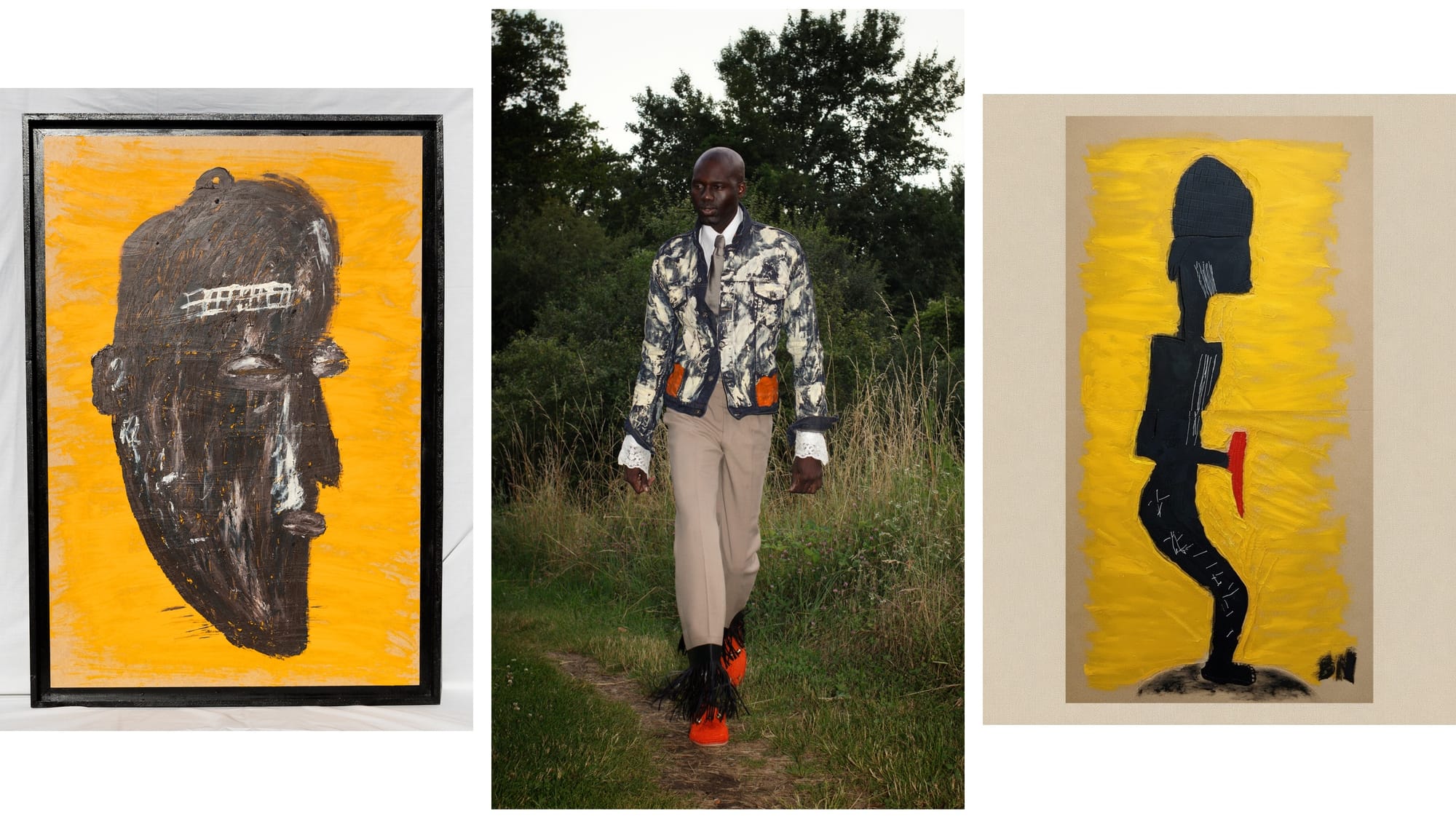
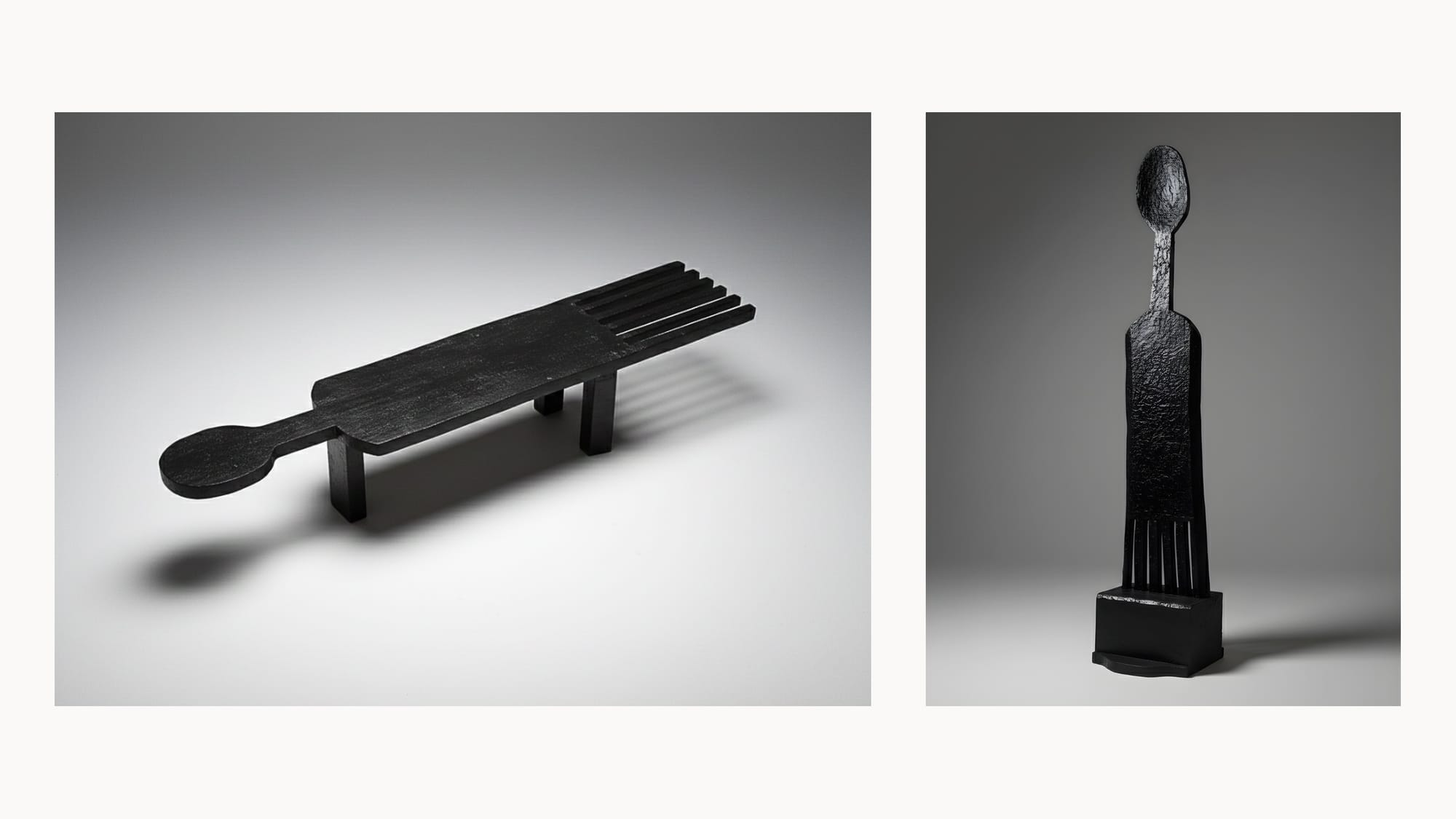
He draws his palette from "the red and ochre soils of Africa" and reinterprets familiar forms such as the traditional African comb. Across his work, identity, transformation and resilience emerge as what he calls "vital forces."
For this Q&A Issue No. 2, I spoke with Ndiaye about reinvention, working with reclaimed materials in an increasingly synthetic art world, and what stays his, and only his, no matter how the industry around him changes.
1. The Life You Thought You Were Going to Have
You were playing basketball at a high level in the United States when a serious knee injury abruptly ended that trajectory. When something you've built your identity around disappears, who are you the morning after? Looking back, what did losing that future ultimately make possible?
It taught me to never stop expanding myself. It taught me to be curious and to take chances.
2. Your Reinvention
You've reinvented yourself at least twice, from athlete to fashion creative, from fashion creative to fine artist represented by international galleries. What has helped you thrive through two reinventions, and build something sustainable on the other side each time?
People forget that life is, to my mind, a video game. (I am not a gamer but a geek for those who really know me). Skills, tools, and different forms of intelligence are accumulated for every step we take in life.
Sometimes they can really transfer from one domain to another which most people don’t think about. For instance, one of my actual clients is a Medical clinic, and I do different cultural or creative projects with international governments as well.
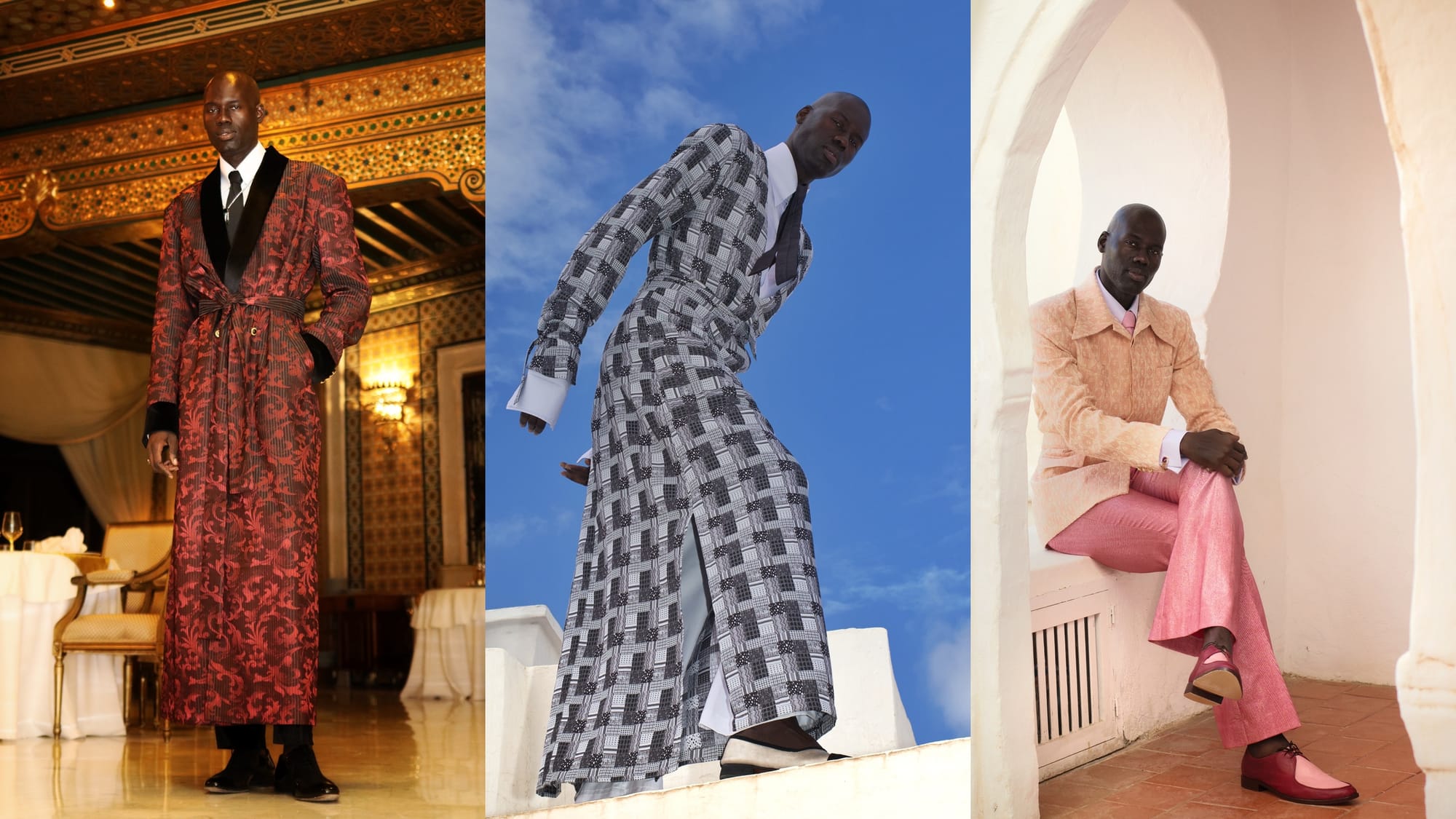
I did work with individuals on long term or project-based work before becoming an artist. Today, I exercise all of my skills, including being an artist. To let you in on something most people don’t know yet: most of the clothes and shoes I wear are designed by me. It’s a privilege I unapologetically savor because…if you only knew the work it took.
3. The Things We Discard
Transformation isn't only part of your personal story; it's physically present in your work. You paint on recycled wooden panels and create totems from found objects, sourced African masks, and natural materials. What do you see in something that another person might consider finished, broken, or without value?
I can’t really say actually. I think here has to be a level of curiosity and risk to be able to explore without fear. Be curious! Be imaginative!
4. Existing Between Worlds
You were born in Senegal, lived and studied in the United States, worked internationally in fashion, and your work moves between African cultural references and contemporary European and Western visual languages. Has moving between these worlds ever made it difficult to define where you belong, or has refusing a single definition become part of your power?
Nowadays, we have become “in-betweeners” because travel has become much more accessible; therefore, people are able to go from place to another and feel at home.
Globalization! I find it difficult to state a home for myself. I call the world my home. I have become the result of my curiosity, self-affirmation, travels, and imagination.
"Do it for love and
choose yourself unselfishly!"
5. The Inspiration
You've said you draw your color from "the red and ochre soils of Africa," and your forms reach back to hieratic African tradition and objects as ordinary as a traditional comb. What is it about reworking something so familiar- a color from the earth, a shape from daily life that lets you say something new with it?
I like reimagining the possibilities in general. I have learnt to let that transgress into my thought and creative process. I’ve started reworking the hair comb into different possibilities because… why not?
I know I am a man of different walks of life today, but I am very proud of where I come from and very eager to show that in my work as an artist.
6. When the Artist Recognizes Value
Was there a particular exhibition, collector, commission, or moment when you realized: this is no longer simply something I make; there is a place in the world for my work?
My very first commissioned work after my very first exhibition in January 2023. I realized then that work does speak to people, and there is no greater feeling for me
7. Creating Value
Artists are constantly navigating the uncomfortable intersection between personal meaning, cultural value, and commercial price. Was there a moment you misjudged what a piece was worth in either direction, and what did it teach you about how value actually gets assigned to art?
Because I have a business and strategic background, I learned to listen and pay attention when entering the Art market. I caught up quickly thanks to Gallery BSL in Paris and Gallery Alejandra Topete in Mexico.
8. AI Impact On Art
Your work is defiantly physical. We're entering a moment when technology can generate images, imitate styles, and produce objects at extraordinary speed. What's the real challenge for an artist like you? What becomes more valuable when making things becomes easier?
They say: if you can’t beat an opponent, make it an ally. As for now, I am not very concerned with AI taking over my work as an artist because I believe an artist shares a part of his or her soul when creating Art… AI can’t replicate that level of humanity.
My questions…who is going to do the studio visits? Who is going to explain those emotions behind those strokes?
9. What You Wish You'd Known
If you could sit down with the Badara who had just been discovered during that basketball recovery, before Parsons, the galleries, becoming "cultural ambassador of Senegal", what's the one thing you'd insist he understand that nobody told you at the time?
Invest deeper in myself. I always have, but you can’t ever do so enough. The vision is always clear for a person who is grounded, no matter the twists and turns of life.
Being grounded has made me respectful towards myself, resilient, and confident enough to start new tabs on life
10. Irreplaceable
You've already had one future taken away from you and created another. So perhaps you understand this question differently from most: in a single sentence, what makes Badara Ndiaye irreplaceable?
Do it for love and choose yourself unselfishly!