Desire For Human Excellence Has Increased Despite Technological Advancement


In 1784, James Watt's steam engine began its erasure of an entire world. Within decades, the hand-loom weavers of Lancashire, craftspeople who had spent years mastering a trade passed down through generations found their skill suddenly, brutally irrelevant. The mills could produce in an hour what a master weaver produced in a week. The same work could be produced faster than ever before. While the expertise didn't disappear, the market for it did.
This was not the first time. It would not be the last. The telephone erased the telegraph operator. The motor car dissolved the livery stable, the coach driver, the harness maker, the farrier.
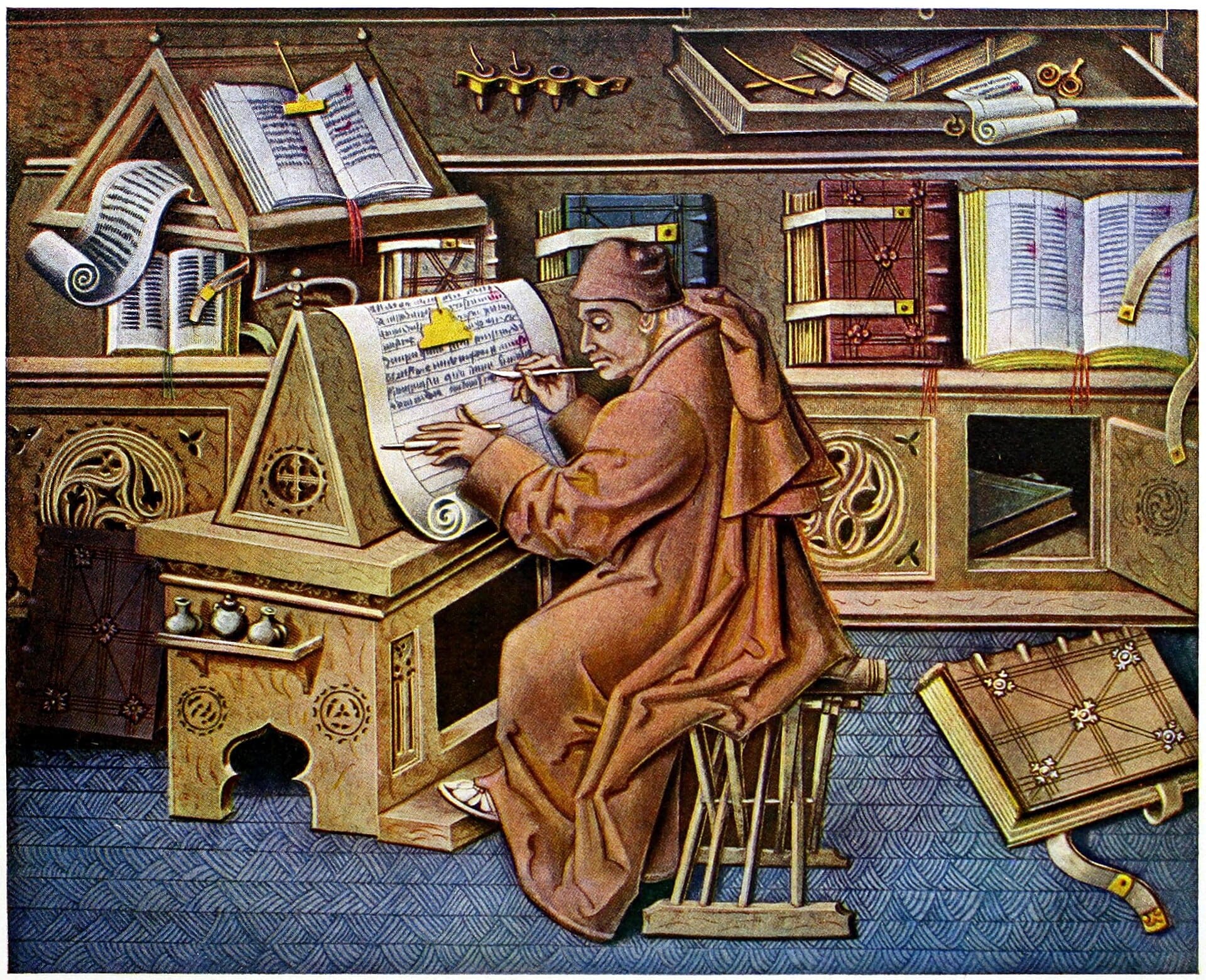
The printing press made the manuscript copyist unnecessary. The calculator ended the career of the human computer, a profession that once employed thousands.
A New Reckoning for Experts
For decades, the value of these professions rested, in part, on privileged access to specialised knowledge. Today, that knowledge is no longer scarce. Clients arrive having already asked AI. They compare your recommendations with answers generated in seconds. They question assumptions they once accepted without hesitation.
It isn't that your expertise has become less valuable. It is that the market encounters it differently than it did only a few years ago.
But here is what the historical record reveals, and what most analyses of technological disruption consistently miss.
In every revolution, many experts became obsolete, and some experts did not just survive; they prospered. They grew. They became more sought-after, more influential, more irreplaceable, precisely as the technology advanced.
The question worth asking is not: what skills survived? The skills, almost without exception, did not. The question is: what quality survived?
The Pattern Across Revolutions
| Era | Technology | Expert Displaced | Expertise Erased | What Made It Separable |
|---|---|---|---|---|
| 1700s–1800s | Jacquard & power looms | The weaver | The weaving pattern | The design could be encoded as punch-card instructions and run by a machine, independent of the weaver's hands. |
| 1800s | Kerosene & electric light | The chandler | The candle-making formula | The wax-and-wick recipe could be written down, standardized, and mass-produced without the maker's touch. |
| 1800s | The railroad | The stagecoach driver | The coach route | Knowledge of terrain, stops, and timing was replaced by fixed rails and a printed timetable anyone could read. |
| 1900s | Internet search & booking engines | The travel agent | The travel itinerary | Routes, prices, and options became a searchable database a traveler could query directly, with no intermediary. |
| 2000s | Generative AI | The analyst / researcher | The research summary | Synthesizing and summarizing information became an instruction any model could execute on demand. |
The pattern is not subtle once you see the evidence across four centuries. In every revolution, the expertise that was erased was the expertise that could be separated from the person performing it. The weaving pattern. The candle-making formula. The coach route. The travel itinerary. The research summary.
What Becomes Irreplaceable When Delivery Method Shifts?
What endured was the expertise that could not be separated from the specific human holding it. The master glassblower's particular eye.
The specific judgment of the editor who had spent thirty years understanding what readers needed before they could articulate it themselves. The instinct of the architect who saw not just what could be built but what should exist in anticipation of how lifestyles are shifting around us.
These were not skills. They were identities. And identity, unlike skill, is not transferable to a machine.
What Every Revolution Actually Rewards
Every technological revolution changes the mechanics of work. It also changes what society values most. When weaving became abundant, craftsmanship became a luxury.
When information became searchable, judgment became scarce. When knowledge became accessible to everyone, perspective became the premium. Technology has never reduced our demand for human excellence. It has simply changed where we look for it.
This is the pattern history reveals. The experts who endured were never competing on what they knew. They were competing on how they saw. Their value no longer came from delivering information or executing a process. It came from applying judgment, taste, intuition, experience, and perspective in ways no machine could replicate.
The technology changed. Human excellence did not. Which brings us to the question facing today's expert.
Why Should They Still Choose You?
What made these experts irreplaceable was not that they adapted faster. Many of the experts who adapted fastest, who learned to use the new technology most quickly, disappeared from history just as thoroughly as those who refused to adapt at all.
The variable that determined survival was something more fundamental. It was recognition.
|
The experts who endured were the ones who finally understood what people had always been buying from them, and built everything around that understanding. |
Not what they delivered. What they made possible. Not the service. The transformation. Not the expertise. The specific, irreplaceable way their expertise was applied through the particular lens of who they were.
The master weaver who survived the Industrial Revolution did not survive by weaving faster. He survived by recognising that what his best clients had always valued was not speed; it was the specific quality of judgment that guided his hand. That quality became the foundation of a new kind of artisanal premium that the mill could not produce.
The travel agent who survived the internet did not survive by booking faster. She survived by recognising that her clients were not buying flight times. They were buying the certainty that someone who knew them, knew the destination, and understood the gap between those two things would make the experience exceptional. That specificity of knowledge became more valuable, not less, as the volume of available information increased.
In both cases, and in every case across the historical record. The survival was preceded by a moment of profound clarity. A moment in which the expert stopped describing what they did and began to understand what people had always been hiring them for.
That moment of recognition changed everything. Because once you understand what people have actually been buying, you can stop accidentally delivering it and start intentionally amplifying it.
The AI Era and the Same Question
The service-based expert of 2025 is facing precisely the version of this reckoning that every generation of experts has faced before them.
AI can generate content. It can produce frameworks. It can research, analyse, summarise, and advise, in seconds, at scale, for a fraction of the cost. The expertise that was valuable because it was scarce is becoming abundant. The process that was worth paying for is becoming free.
And the experts who are beginning to struggle are, almost without exception, the ones who built their positioning around what they do rather than the unique value only they can bring.
There is a lawyer who was valued for her knowledge of the law. AI knows the law. There is a financial advisor who was valued for his ability to analyse markets. AI analyses markets. There is a consultant who was valued for the frameworks she taught. AI generates frameworks.
But there is also a lawyer whose clients have always chosen her not because she knows the law but because of the specific quality of judgment she brings to the particular intersection of law and human complexity, a judgment that emerged from her psychology, her experience, her worldview, and the specific way she reads the room when stakes are highest.
That is not replicable. That is not learnable by a machine. That is the result of a specific human life, lived in a specific way, producing a specific configuration of insight that has never existed before and will never exist again.
But how do you get people to recognize that type of value when you communicate or prepare proposals? That is where most experts struggle. Because for a very long time, being qualified and experienced (the things you put on your resume) was enough. Today, it is less valuable in making you the obvious choice.
The Brand IT Factor® Moment
The Brand IT Factor® method has helped leading experts not only stay relevant but stop accidentally delivering their value and start intentionally amplifying it.
You already have an identity. What's missing is the language for it: the precision to communicate what specifically makes you the obvious choice, the confidence to own it, and a system that builds positioning, voice, pricing, and selling language around the one irreplaceable thing that was always there.
Most of the experts I have worked with have shared, "I can't really describe what I do. But my clients are always saying how exceptional the experience is. I just don't know how to communicate so that people who have never worked with me, see it."
The feedback is remarkably consistent across industries and career stages. Experts don't say, "Now I have a brand." They say, "I finally understand why people have always chosen me and why they will pay more for my offer." Not because they became more valuable, but because they finally saw the value they'd never been able to name.

The Industrial Revolution didn't make expertise obsolete; it made generic expertise obsolete. The Electrical Age didn't make knowledge worthless; it made undifferentiated knowledge worthless. The AI era isn't making experts irrelevant; it's making invisible experts irrelevant.
Those who prosper are the ones who are able to articulate, position, and promote what makes you irreplaceable. Download the free prospectus to learn more about how top business leaders are becoming more sought after and earning more despite AI.
Hanna Fitz is a Global Brand Strategist, founder of Cultured Life, and creator of the Brand IT Factor® method. She works with entrepreneurs, experts, and founders across 25+ countries. Brand IT Factor® is a registered trademark of Hanna Fitz.