Four Tests Every Luxury Brand Must Pass To Grow In Challenging Times

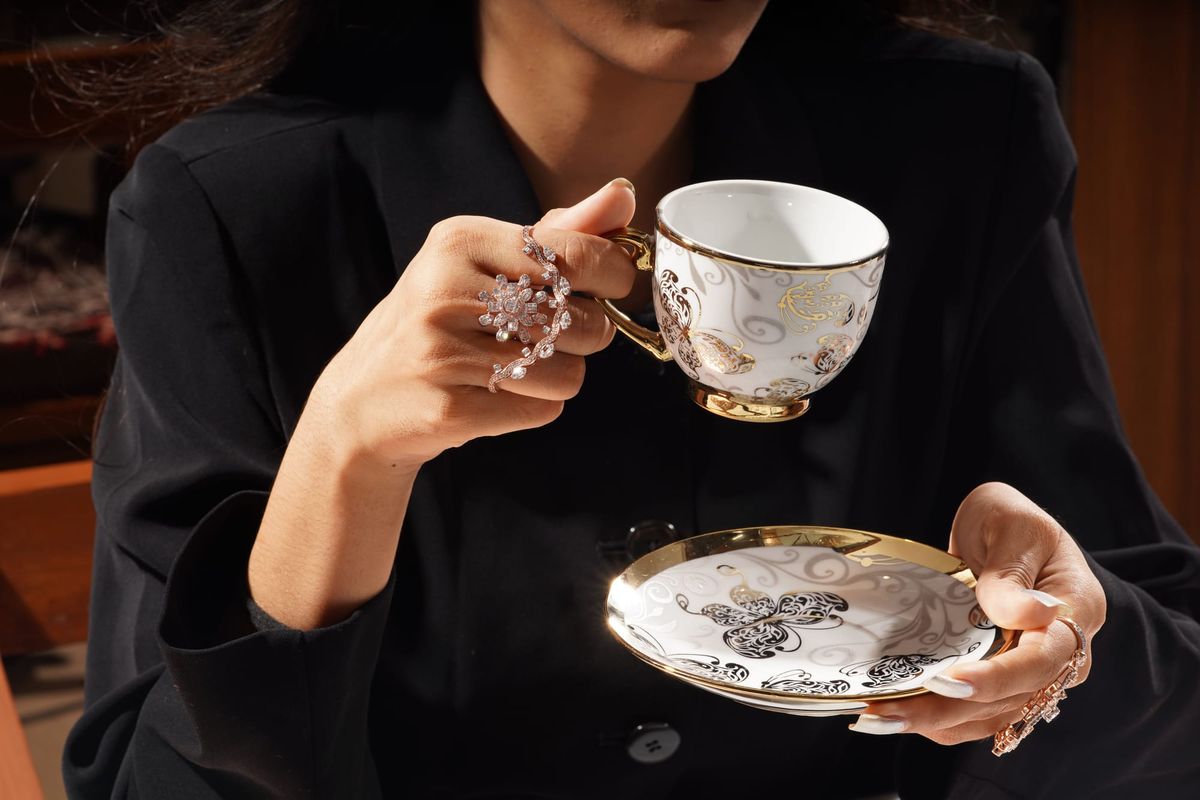
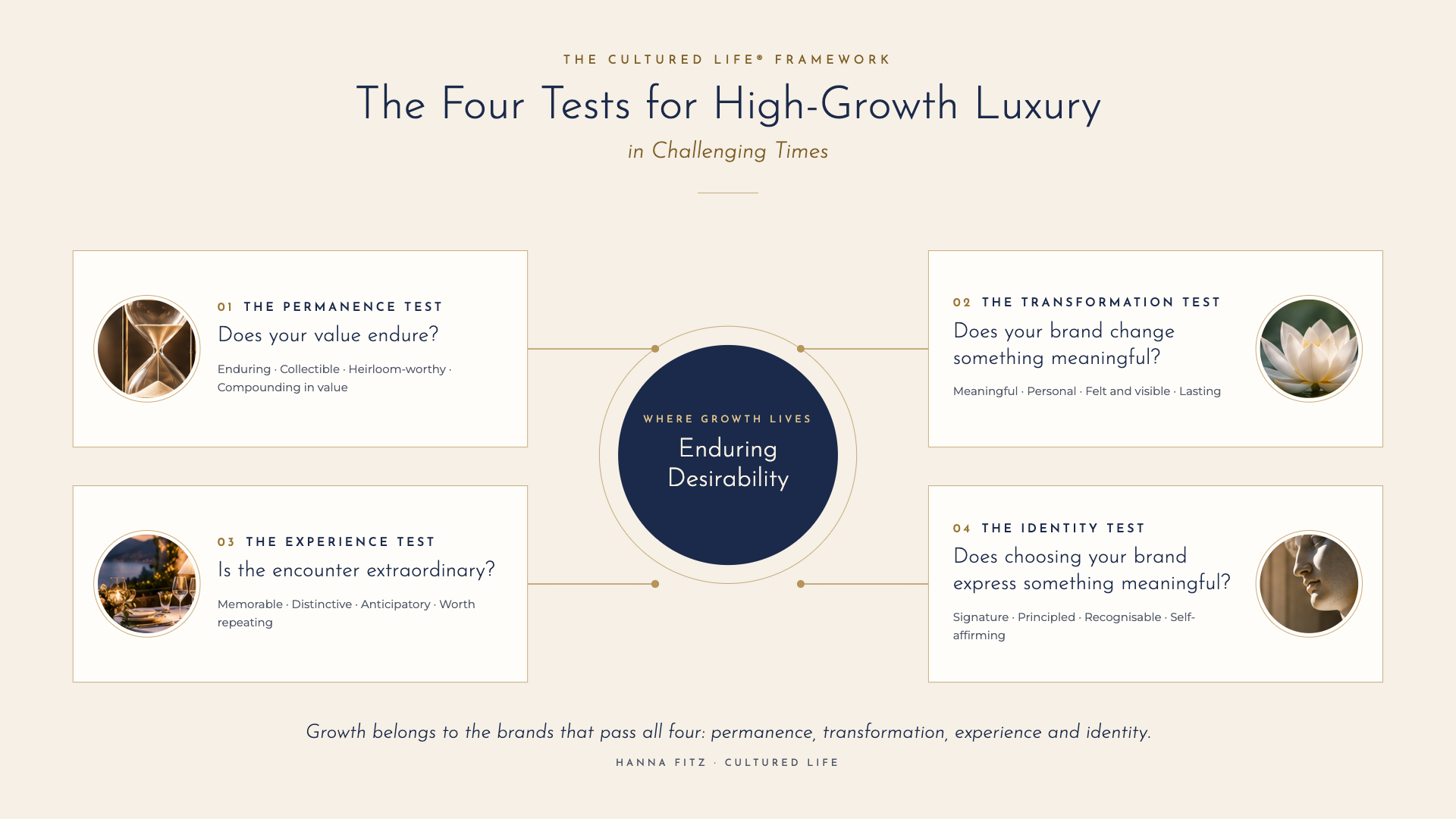
The Four Tests of Enduring Brand Desirability, and what they mean for every business selling a premium offer
Consumers are not abandoning luxury. They are becoming more selective about the kind of value they are willing to invest in.
After years of rising prices, expanding aspirational consumption and an almost relentless pursuit of exclusivity, the luxury client has begun asking a harder question: what truly deserves a premium?
I believe this moment is less about the disappearance of desire and more about the standards by which desire is justified. And those standards hold a lesson for every business that wants to sell premium offers and build lasting brand value, whether you sell necklaces, hotel stays, homes or expertise.
The contradictions that reveal the new rules
Look closely and luxury's current behaviour seems full of contradictions. Fine jewelry continues to show remarkable resilience.
Richemont, the group behind Cartier, Van Cleef & Arpels, Buccellati and Vhernier, reported 14% sales growth at constant exchange rates across its Jewellery Maisons for the financial year ending March 2026. And this is not simply a story of billionaires acquiring one-of-a-kind creations.
Collectible watches still command extraordinary premiums, even though technology surpassed their practical function long ago. People are investing more and more in wellness and longevity. And in uncertain times, someone might postpone a $5,000 handbag yet still buy a $70 lipstick or a $250 fragrance.
These are not contradictions. They are clues. Each one points to a kind of value people are still willing to invest in, and sometimes willing to invest more in. Together, they form what I call the Four Tests of Enduring Brand Desirability.
1. The Permanence Test: Does your value endure?
In times of uncertainty, luxury buyers play a longer game. They look for security, safety and long-term value. That is why high jewelry becomes more desirable when markets waver. It is seen as an asset: a real investment piece with the potential to hold its value and become part of an enduring story.
A one-of-a-kind piece can become a family heirloom. One day it may belong to a daughter or granddaughter, carrying memories and meaning far beyond the moment it was bought. An engagement ring. An anniversary gift. A graduation. A personal achievement. Its value is never determined by the object alone. It is enriched by the memory attached to it.
This is the difference between consumption and commemoration. One satisfies a desire in the present. The other gives that desire a place in someone's personal history.
For your business, the question is whether your value proposition is built on immediate gratification or enduring relevance.
For an expert brand, permanence might be a proprietary methodology that keeps shaping a client's decisions years after the engagement ends. For a luxury hotel, it could be an experience that becomes part of a family's traditions. For a developer, it means spaces that remain meaningful across generations.
The more enduring your value, the less your brand depends on the constant pursuit of novelty.
Ask yourself: Will what I offer still create value, or become part of someone's story, years from now?
2. The Transformation Test: Does your brand change something meaningful?
Consider the extraordinary growth of wellness and longevity. According to the Global Wellness Institute's November 2026 report, wellness real estate grew 23.2% between 2024 and 2025, and wellness tourism expanded 11.4%. These figures describe the wider wellness economy rather than luxury alone. Still, they reveal how much people now value investing in their long-term well-being.
Perhaps the ultimate luxury is no longer acquiring more, but preserving what we already have. Our health. Our vitality. Our independence. Our ability to experience life fully for as long as possible. Unlike a handbag or a beautiful piece of furniture, these are assets we cannot simply replace.
That is the appeal of luxury wellness retreats, personalised longevity programmes and residences designed around healthier living. Their promise extends beyond indulgence. They invite people to invest in their future quality of life.
When what you offer helps customers preserve, protect or improve something that matters to them, your value becomes more consequential. For an expert brand, transformation might mean greater confidence, clarity, capability or commercial success: a career breakthrough, a business reinvented, a long-held ambition finally realised.
For a hospitality brand, it might mean moving beyond temporary relaxation to genuine restoration and renewal. The opportunity is to create value that compounds in significance rather than disappears after consumption.
Ask yourself: Can my client recognise a meaningful difference between where they began and what became possible through working with me?
3. The Experience Test: Is the encounter itself extraordinary?
Exceptional brands understand that value is not confined to the product or service. It lives in how customers are welcomed, understood, engaged and remembered.
Objects can be copied. A feeling cannot. A hospitality brand can sell accommodation, or it can invite guests into a world of belonging, discovery and cultural connection. A consultant can deliver a report, or create a process so considered that the client feels seen at every step.
The difference is rarely the product category. It is the care, the anticipation, the sense that someone thought of this for you before you knew to ask.
A memorable experience turns a transaction into a relationship, and a customer into an advocate who carries your story into rooms you will never enter.
Ask yourself: Which moment of my client's journey would they describe to a friend?
4. The Identity Test: Does choosing your brand express something meaningful about the customer?
Recent luxury consumer research suggests that emotional connection now ranks ahead of craftsmanship, heritage and logo recognition as a driver of desirability [ADD SOURCE]. That is significant. Consumers are no longer only asking, "Is this a prestigious brand?" They are also asking, consciously or not, "Does this brand reflect who I am?"
Consider Van Cleef & Arpels' Alhambra collection. Introduced in 1968, its four-leaf clover draws on a widely recognised symbol of luck, transformed into an unmistakable design language.
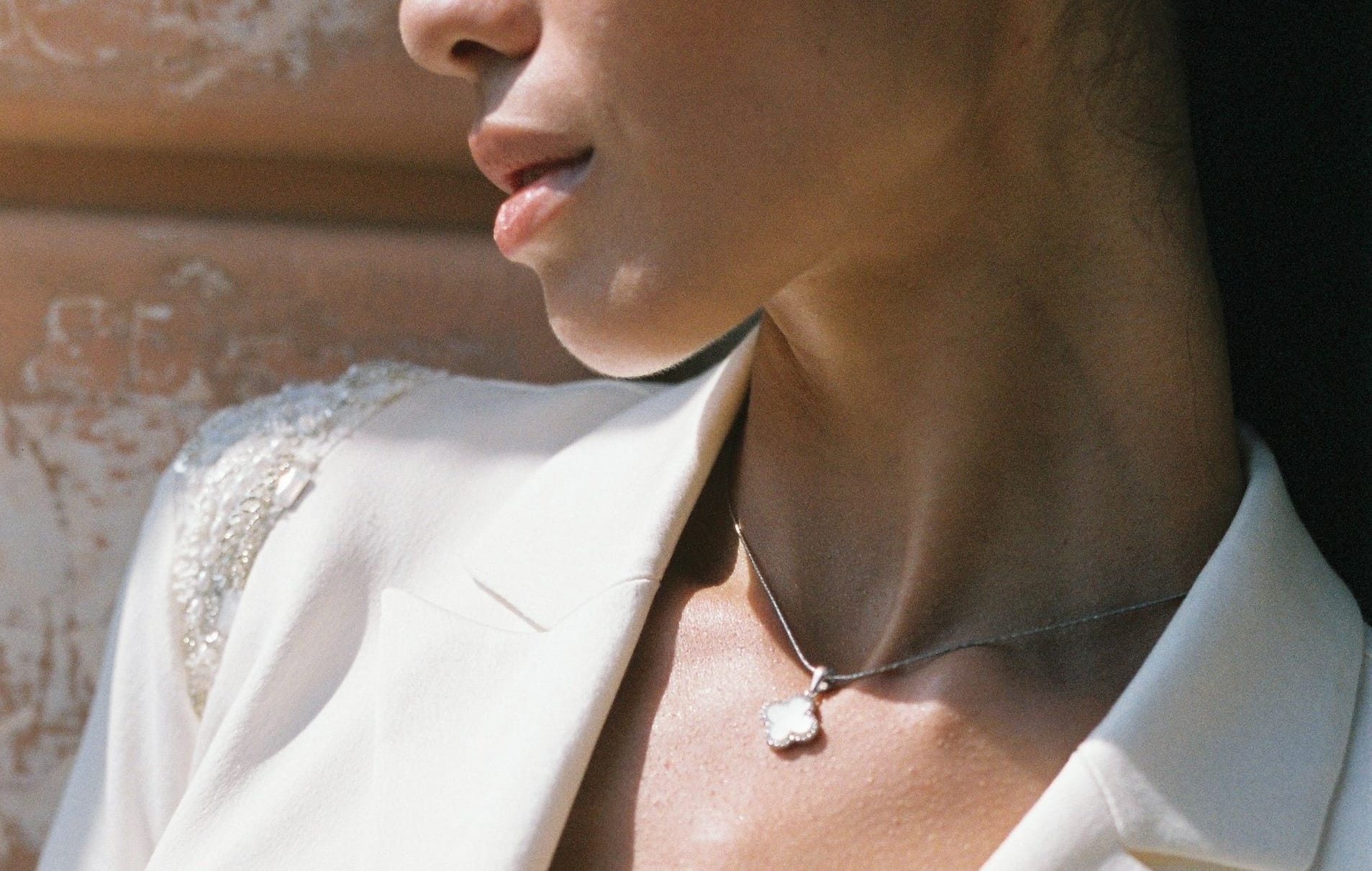
An Alhambra necklace can speak of hope, affection, optimism or the wish for good fortune without a single word of explanation. Cartier's panther, likewise, has become an enduring expression of audacity, elegance, independence and personal power.
Neither symbol draws its significance from precious materials alone. Their power lies in the relationship between cultural meaning, distinctive design and the identity of the wearer.
This is what cultural storytelling achieves when it is built into the architecture of a brand. It does not simply tell people what a product is. It gives them a reason to care about what it represents.
This also explains the lipstick. When a $5,000 handbag feels out of reach, or out of step with the moment, a $70 lipstick or a $250 fragrance still lets someone belong to a world they identify with. It is a smaller doorway into the same feeling: this is who I am. Identity does not disappear when budgets tighten. It simply finds a more accessible way to express itself.
And identity is not exclusive to luxury goods. We choose the spaces we live in, the experiences we pursue, the people we keep close and the brands we support partly because they reinforce our understanding of ourselves.
A developer can sell a beautiful house, or create a home that embodies a philosophy of living. A consultant can sell expertise, or develop a distinctive approach that becomes synonymous with a particular transformation.
When a brand knows precisely what it stands for, the right customers recognise themselves within its world. Desirability grows when people don't merely admire a brand, but identify with it.
Ask yourself: What does choosing me allow my client to say about who they are?
The new standard of desire
The brands with the strongest potential for enduring desirability create value across all four dimensions: permanence, transformation, experience and identity.
Not every business needs to excel equally in all four. But every business should know which dimensions are central to its competitive advantage, and whether it is delivering on them convincingly.
People are willing to invest in what feels enduring, meaningful, personally relevant and worthy of their trust. That is true whether they are choosing a necklace, a hotel or an expert to guide them.
Consumers are asking more of the brands they choose. Perhaps that is exactly what luxury needs. Because the enduring strength of a great brand has never been its ability to charge more simply because it can.
It is its ability to create something people believe is worth more.
Sources: