The Fear of Success Greater Than The Fear of Failure?


I was around 20 years old, speaking to a friend about something amazing that had just happened in her life. Then she said to me, "I'm so happy. Am I dying?" I was shocked. That last sentence caught me off guard. Why would she equate this beautiful level of happiness with death?
Years later, on my own journey, I understood her more clearly as I looked at my own life in my early 30s: still single for seven years, and I wanted to transition my business from in-person to online. Yet both goals felt far from me, and I always felt I fell short of what I was truly aiming for. It was then I discovered that I had a fear of success.
Every time I broke through a new level, I would hit what my friend Dr. Gay Hendricks, psychologist and author of The Big Leap, calls "the Upper Limit Problem". I hit a new limit. Whenever I become aware of it at each stage, I say, "Same ghost, upgraded jacket. What's my fear wearing now?"

The fear; the ghost, as I call it—goes from wearing Zara to Versace. The outfit upgrades with every level, but it's the same ghost (fear) testing the part of the brain that has associated success with some kind of pain.
I've seen this pattern not only in myself but in many founders and experts I've coached as they prepared to become more visible, charge more, or scale their business to the next level. I had a client who was from a very wealthy family who was stuck, unable to charge for her work because she carried enormous guilt asking people to pay her.
I had another client who turned a beautiful project into a disastrous legal conflict just at the moment everything was about to ascend to a very high level. Her ghosts created stories of the people who were helping her, conspiring to steal her project. It was a big mess that could have been resolved with communication, but her ghosts were too strong, and things fell apart. Observing this made me really think about what happens to us when we try to push past where we are to reach a new level.
Our brains are remarkably good at protecting us. A single childhood experience can create an unconscious association between joy and pain, achievement and loss, visibility and danger. One moment you're having fun playing with your friends and feeling pure joy. The next, you're falling and getting hurt. A message of pain follows joy gets wired.
In my case, I grew up hearing, "The higher the climb, the bigger the fall." So naturally, as the climb got higher, an unconscious scanning for the fall would begin.
The brain doesn't always distinguish between a real threat and one it learned years ago. If some part of us believes that greater success comes with greater pain, the brain begins treating success itself as the threat. So it protects us.
Sometimes that protection shows up as anxiety before a big opportunity. Sometimes it's endless refinements instead of launching. Sometimes it's illness with no clear cause, unexpected conflict, or a major expense that appears just as everything is about to come together.
You keep getting close, but never quite arriving. Dr. Gay Hendricks calls this the Upper Limit Problem. Psychologists call it self-sabotage or self-handicapping.
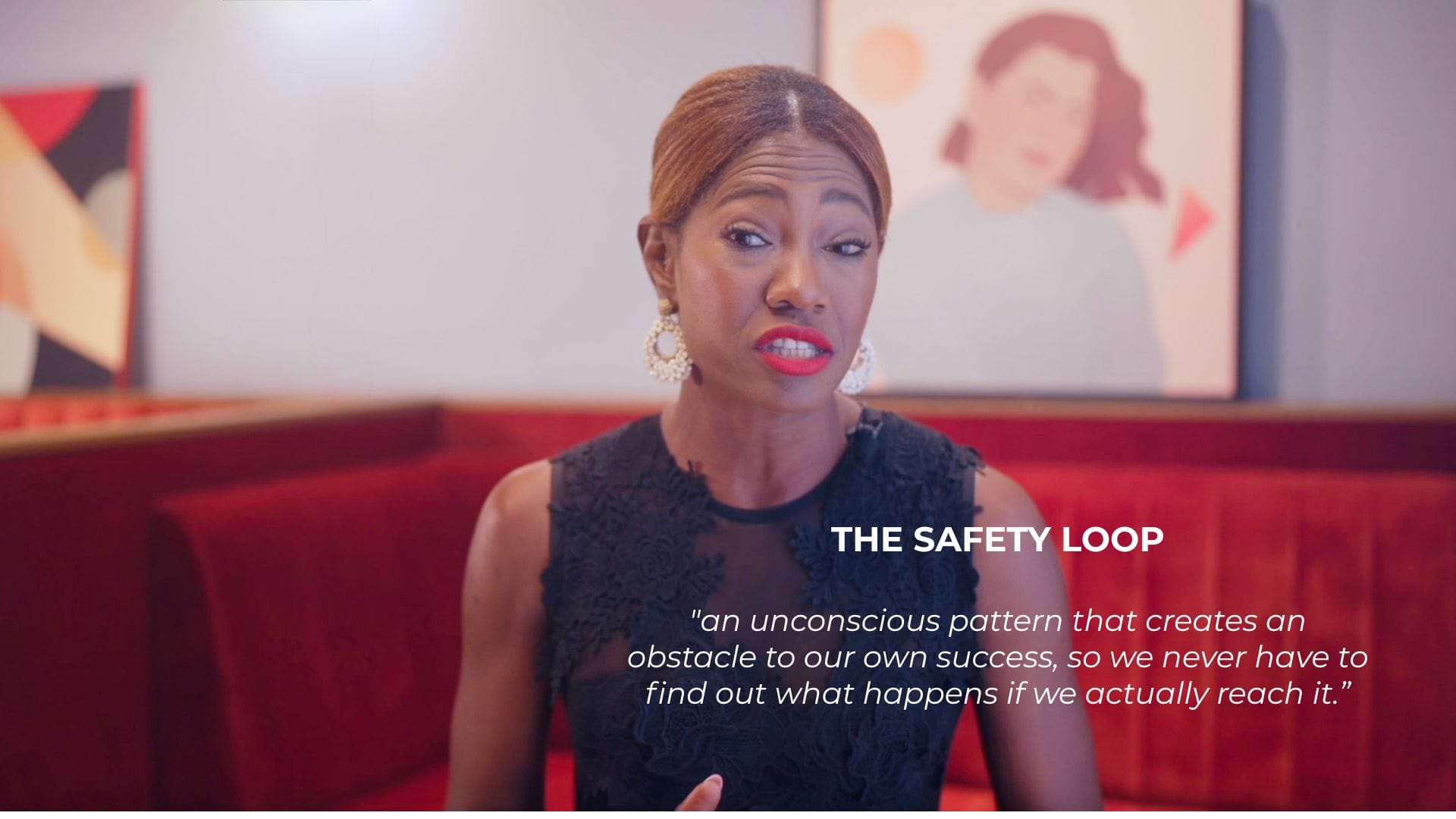
I don't. Because sabotage is intentional. Most of us aren't trying to destroy our success. We're trying to stay safe. I'd rather call it the Safety Loop: an unconscious pattern that creates obstacles whenever success feels more dangerous than staying where we are.
The good news is this:
What the mind learned, it can also unlearn.
The moment you recognize the Safety Loop, you stop fighting yourself, old ghosts, and start questioning the story your nervous system has been trying to protect you from. I'm in a new place in my life. I achieved the goals I set for myself in my thirties, and now there is another level calling me. With it has come another visitation from my own devil—this time dressed in Versace.
Success has levels. Each level asks us a new question. And that test is almost always in the mind. World-class athletes don't just train their bodies. They train their minds. You hear it all the time in sport:
"It's a mental game."
Whether you journal or simply spend some quiet time alone, ask yourself: What do I believe this next level of success will cost me?
Then keep asking:
- What am I afraid will happen if this actually works?
- What feels dangerous about becoming more visible, more successful, or more fulfilled?
- Do I fear having too much responsibility?
- Do I fear that the spotlight will be on me and there will be consequences?
- Do I believe that joy is always followed by loss?
- What is the unbearable price I don't want to pay if I finally reach the next level that has been evading me?
- Where did I first learn that story?
Awareness is what breaks the Safety Loop. Once you can name the fear, you stop mistaking it for reality.
One final thought.
Not every delay is your Safety Loop. Some setbacks are invitations to think differently. Sometimes life isn't preventing your success; it's redirecting you toward the version of success that is truly yours.
Before you push harder, ask yourself the question:
Is this dream coming from my deepest truth, or from a need to prove something, impress someone, or heal an old wound?
Whether it is your Safety Loop or an invitation to a different path, the obstacle isn't there to stop you. It's there to elevate you. Until we answer these questions honestly, we may keep protecting ourselves from the very life we've been praying for.