They Thought These Were Just "Worthless" Art.

During an interview with leading German art gallerist Walter Storm, I ask "how do you know what to buy?" His answer stayed with me. "Buy what you love", he said the piece that adds something to your space, not the one you think will appreciate.
None of the three pieces in my small, unusual collection would fetch anything at an auction. They are not investment pieces that I hope will appreciate in value. But each one stopped me the moment I found it, and each one has taught me something I didn't expect to learn from a piece of art. They taught me about 'real value" that can't be priced.
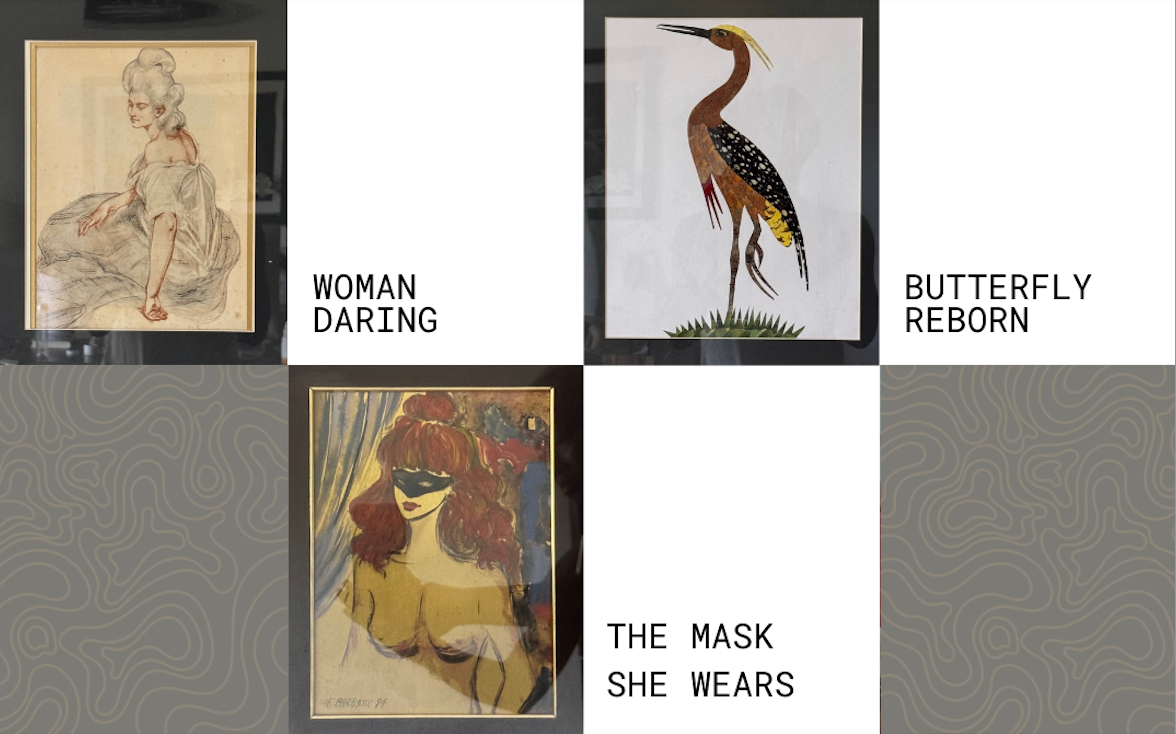
A Woman, Daring (1868)
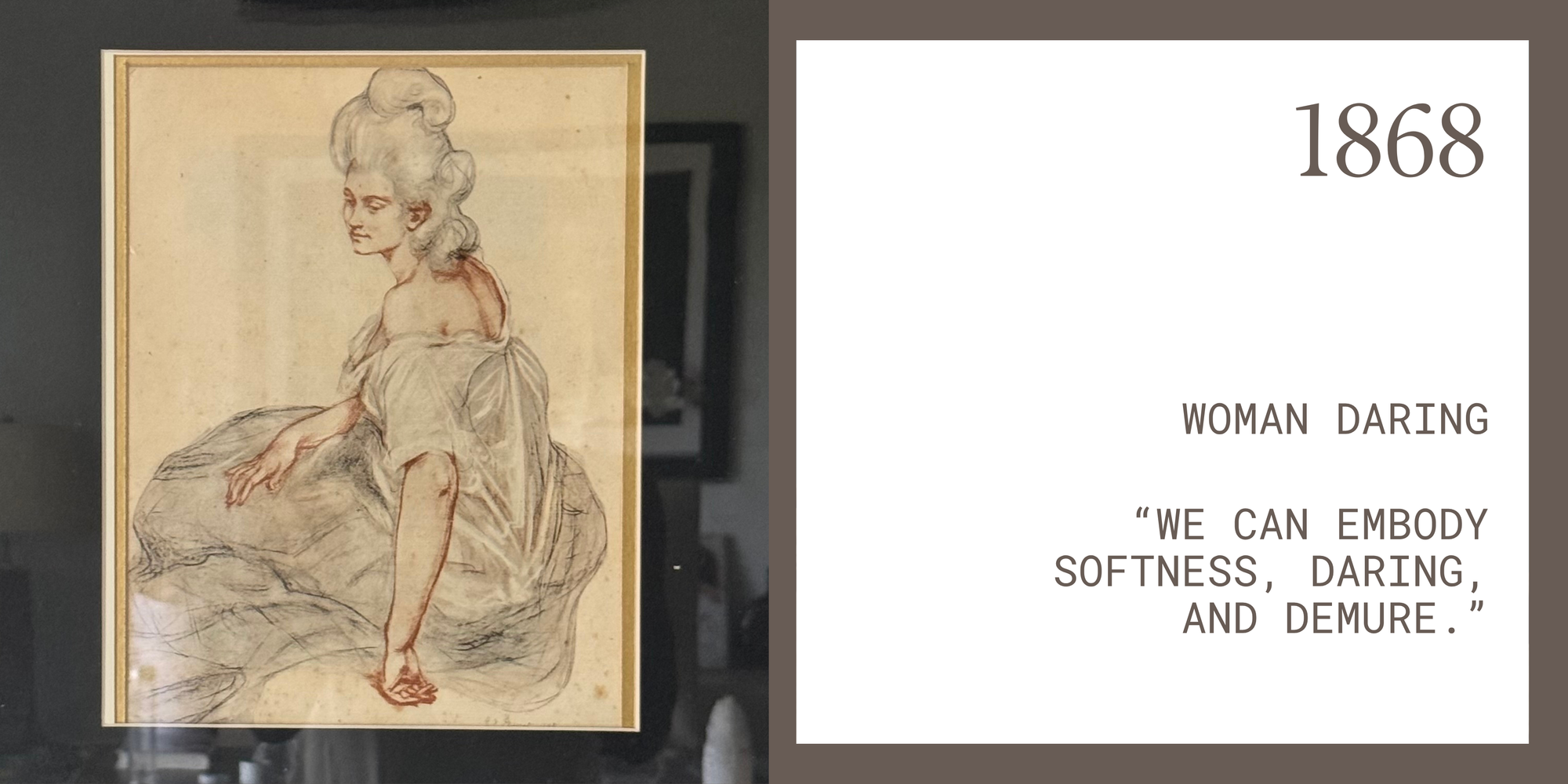
An original pencil drawing dated 1868. I found this piece at a flea market in Beaulieu-sur-Mer, on the French Riviera, on an ordinary walk that turned into anything but. For her era, she's provocative: exposed in a way that would have been genuinely daring for a woman to display herself in 1800s.
But her face still holds a kind of innocence. That contrast is what I can't stop looking at. She is both provocative with a look of innocence. There is a delicacy in the moment. She is wearing her nightgown, yet her hair is so well done. There are such beautiful contradictions here. It reminds me to be both courageous and vulnerable. That we can embody softness, daring, and demure in the same moment.
Butterfly Wings (2025)
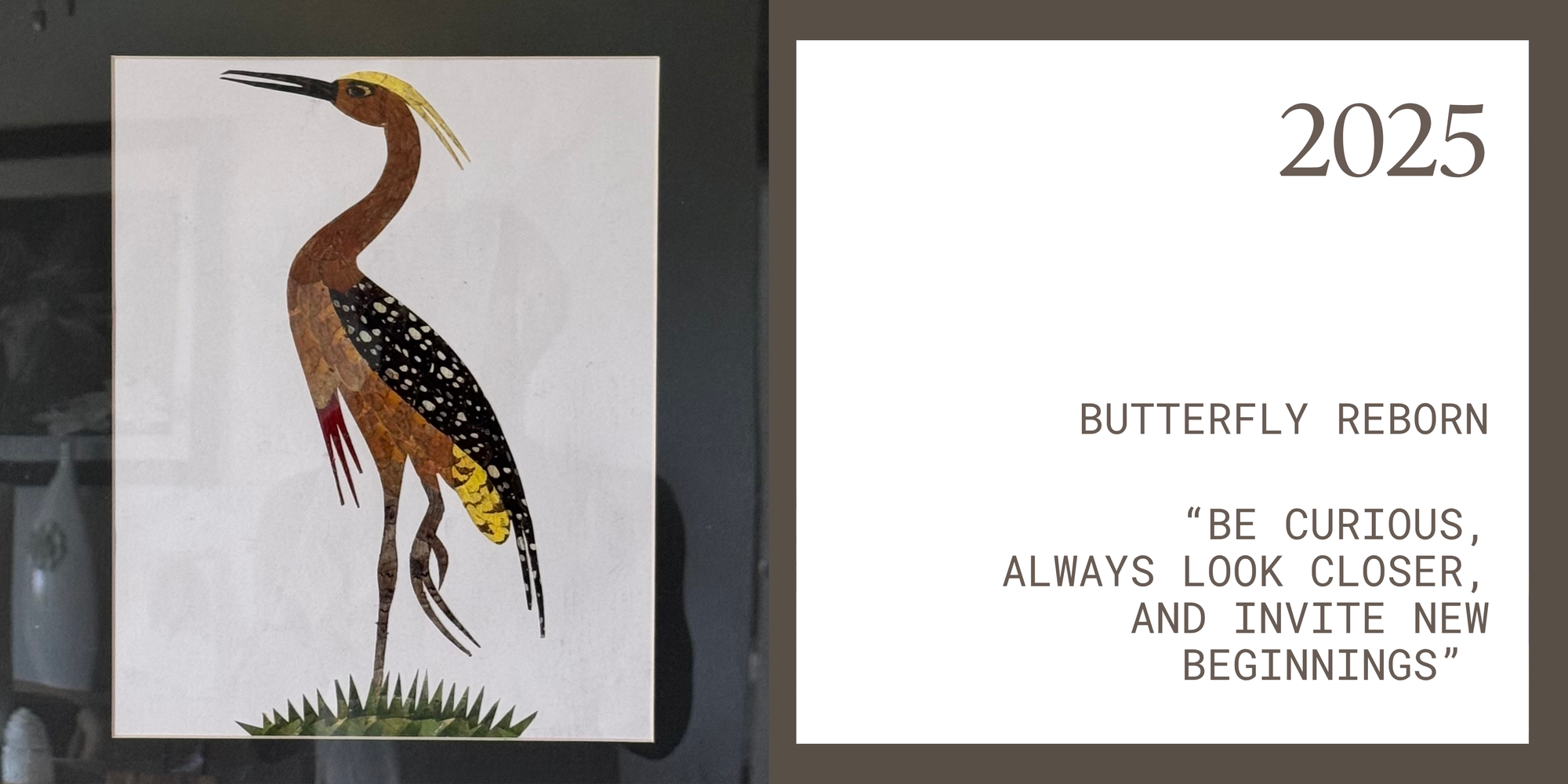
This second piece Steffen bought for me whilst we were on holiday in Rome. We were having drinks when a street vendor was working his hustle, the way so many do there, and so many people just chase them away or ignore them. I asked him where he was from. He shared that he had just moved from Senegal to Rome about a month before.
When I asked about his work, he told me it was made entirely from butterfly wings, collected sustainably from farms where the butterflies live out their natural four-to-five-day lifespan. Nothing is killed for the piece; the wings are gathered only after the butterflies have already gone.
What struck me is the idea underneath it: nothing has to simply waste away. Everything can be given another form, another way to be beautiful, another way to last. I really love this because the beauty of this piece was not only in the butterfly wings getting a new life but also the artist who was starting a new journey in Rome.
When you look at the piece from a distance, it looks ordinary, but when you look closer, you see its true beauty. This piece reminds me to be curious, always look closer, and invite new beginnings.
The Mask She Wears (1984)
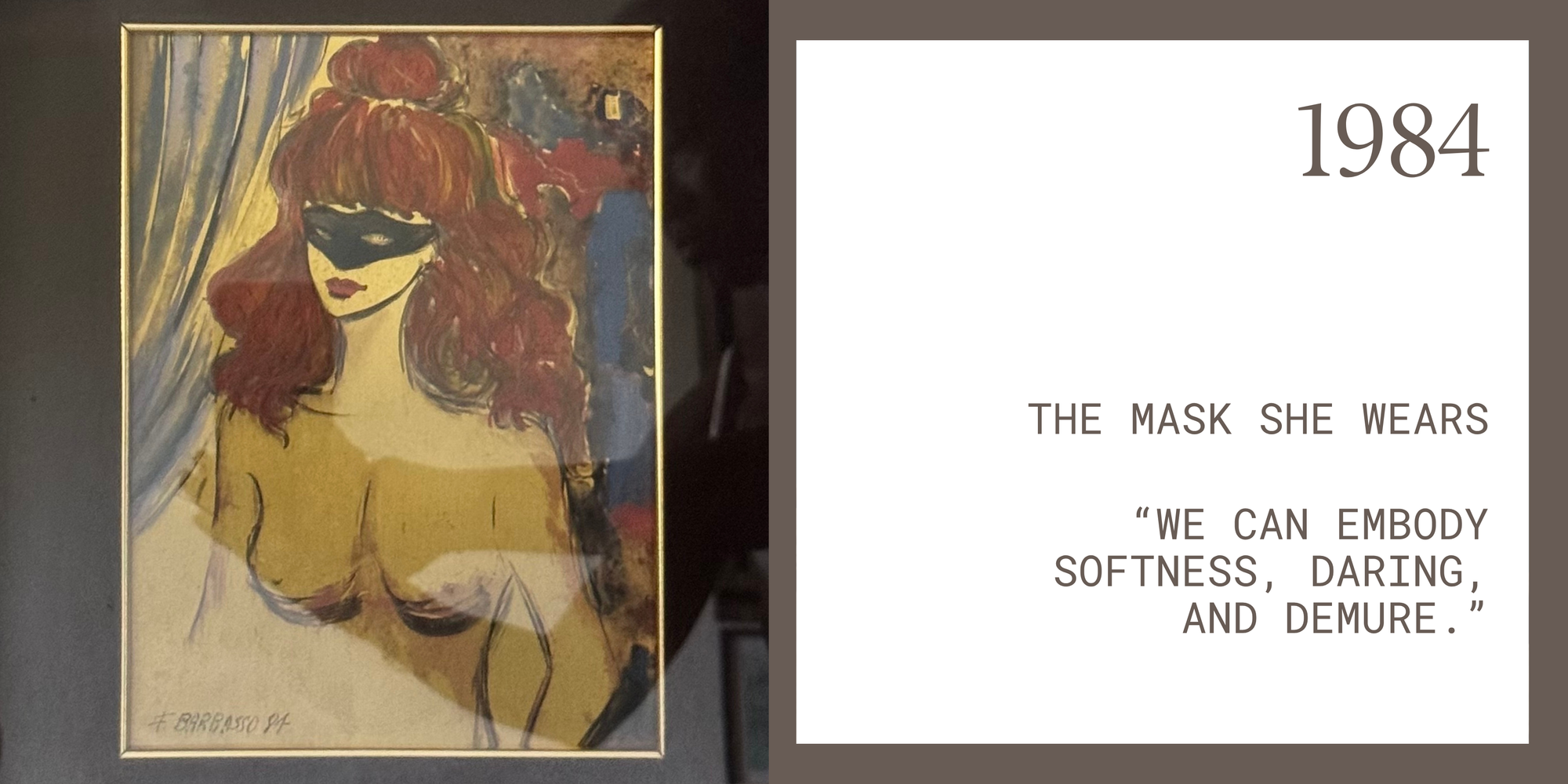
In my upcoming book, The Magic Hour, I explore the philosophy of the masks we wear. This theatrical figure evokes the elegance of the Venetian masquerade, where masks symbolized mystery, transformation, and hidden identity, while its expressive style reflects the bold creativity of Italian art and design in the 1980s.
I bought this art piece at an antique market in Palermo, Sicily. What I love most is the quiet contradiction she embodies. She conceals what society expects to see, yet reveals what convention tells us to hide.
So often, we do the opposite. We reveal the version of ourselves that feels acceptable, the polished, predictable, socially approved identity, while hiding the very qualities that make us original. The parts of ourselves we were taught were too different, too much, too unconventional, or simply not enough.
Perhaps the real mask isn't what we cover. It's what we've learned to perform. And perhaps the magic hour begins the moment we have the courage to take that mask off.
This piece suggests the reverse might be where the freedom is. That unmasking the part we're most tempted to hide is what actually sets us free.
Walter's advice wasn't just about buying art; it was about choosing what means something to you rather than what it means to the world. I'd rather live with things that make me feel something and remind me of something than just statement pieces just to make a statement.
Another thing: what is worthless to others may be worth everything to you and the people who value the unique story you carry. Don't rate yourself on the world's perception of value.