Legacy Lessons from "Grinding It Out" Ray Kroc Memoire

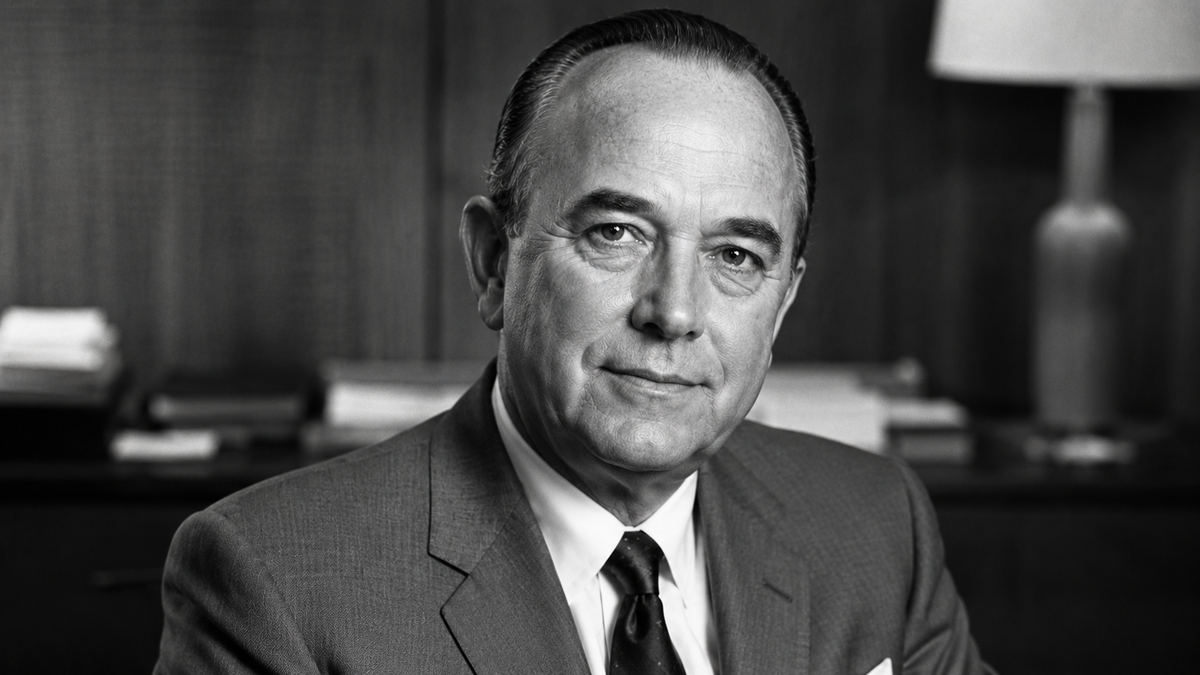
I have been listening to the audiobook of Ray Kroc, the man who took McDonald's global with the Franchising method.
What strikes me most is not the McDonald's success story itself but everything that came before it. He had many different sales jobs and products, each one building national distribution, each one, at the time, feeling like simply the next chapter.
But viewed together, they form something far more intentional: a preparation for the one opportunity that would become a global household name. For entrepreneurs who have lived many professional chapters and quietly wondered whether it all adds up, Kroc's journey offers four lessons worth sitting with.
Legacy Lesson One: Your Eclectic Resume Is Not a Liability. It Is Your Qualification.
Kroc did not arrive at McDonald's as a food industry executive or a franchise attorney. He arrived as a man who had spent decades learning how supply chains work, how restaurant owners think, what makes a product scalable, and how to build trust with buyers across an entire nation.
His time at Lily Tulip selling paper cups, and then his years distributing the Multimixer across the country, gave him a layered fluency in both the restaurant industry and the retail market that no single career path could have produced. The entrepreneur who has worked in consulting, then hospitality, then media, then coaching is not scattered. They are compound. Every industry you have moved through has deposited something into you that the specialist can never access. The breadth is the credential.
Legacy Lesson Two: Every Product You Have Sold Was Teaching You the One That Would Define You.
Kroc later reflected that all those years of experience selling things to businesses made the decisive difference when he sat across from McDonald's suppliers negotiating prices for buns, meat, and ketchup. He was not starting over each time he moved from paper cups to the Multimixer.
He was building a single, continuous intelligence about how commerce actually moves. The entrepreneur who dismisses their earlier ventures as detours is misreading the story. Those chapters were not interruptions to your purpose. They were the curriculum. Your legacy brand will call on all of it, often in the same week.
Legacy Lesson Three: The Readiness for a Big Opportunity Is Built in the Quiet Years, Not the Spotlight Ones.
Kroc worked most of his career as a salesman, moving from one product to the next. It was not until he was 52 years old that he walked into the McDonald brothers' restaurant in San Bernardino and understood immediately what he was looking at. Most people walked past that restaurant. Kroc could not, because he had spent a lifetime developing the specific eyes required to see it. The capacity for vision is not accidental.
It is the accumulated result of showing up, studying markets, absorbing failure, and refusing to become cynical. If you feel like you are in a quiet season, understand that you are being made ready. The bigger the opportunity, the longer the preparation required to be the person who can hold it.
Legacy Lesson Four: Your Legacy Brand Will Require You to See Further Than the People Who Built the Original.
The McDonald brothers had already built something remarkable in California, but it was Kroc who introduced himself and helped them pursue a scale of franchising they could not even have imagined on their own. The brothers wanted a good, clean, manageable business.
Kroc wanted a civilization. Neither vision was wrong, but only one became a legacy. The entrepreneur with a wide career history has almost certainly developed the rare ability to zoom out, to see the architecture beneath a single product or idea, and to imagine what it could become under bolder stewardship.
Many people asked him why didn't he just take the idea and replicate it under his own brand. He said that he just had a feeling about the McDonald's name and that they had perfected the system. He wanted to collaborate with them.
When you encounter the right opportunity, do not negotiate yourself down to the size of someone else's imagination. When he brought his idea of franchising to the brothers, they wondered who could do it. Ray Kroc leaned forward and say: "What about me?" He jumped at the chance to build something bigger than himself instead by joining forces rather than starting from scratch. That moment of recognition, when you see what others cannot and are willing to claim it, is where legacy begins.
If your career has taken you through many rooms, do not apologize for the journey. Do not flatten your story into something more conventionally legible for people who have only ever lived in one.
The range is not the distraction. The range is the preparation. And somewhere ahead of you, there is an opportunity that will only make sense to you. The one who has seen exactly what you have seen, survived exactly what you have survived, and built exactly what you have built. Every twist and turn was always connecting the dots to that big legacy breakthrough. You're not doing too many things, you're accumulating a collection of skills and expertise that will serve a greater purpose.
![[The New Strategy] Why the Smartest Brands Online Have Stopped Posting](https://storage.ghost.io/c/6e/1f/6e1ff8ff-5aad-444d-8edd-835451f60e7d/content/images/size/w600/2026/05/Hanna-Banner--1--1.png)