What Hit Shows Like MasterChef Reveal That Every Expert Should Know


Every year, millions of people around the world tune in to watch cooking competitions. On the surface, they appear to be about food.
A basket of ingredients, the ticking clock, a panel of judges, and only one winner.
I came to understand firsthand what separates the winners of competitions like MasterChef from the runners-up after creating and producing Junior Chef Caribbean, in collaboration with the Italian fine dining water brands S.Pellegrino and Acqua Panna.
What most people miss is that you are not drawn in because of the cooking competition, you are watching how human excellence and being able to make that excellence visible to others under the pressure of time are revealed.
During our cooking competition, every challenge began the same way. The contestants stood behind identical workstations. Everyone was always given the same main ingredients.
The same pantry, equipment and the same amount of time. Yet by the end of the challenge, twelve completely different dishes arrived at the judges' table.
What Happened Between The Pantry And The Plate Is The Secret To Successful Expert Positioning
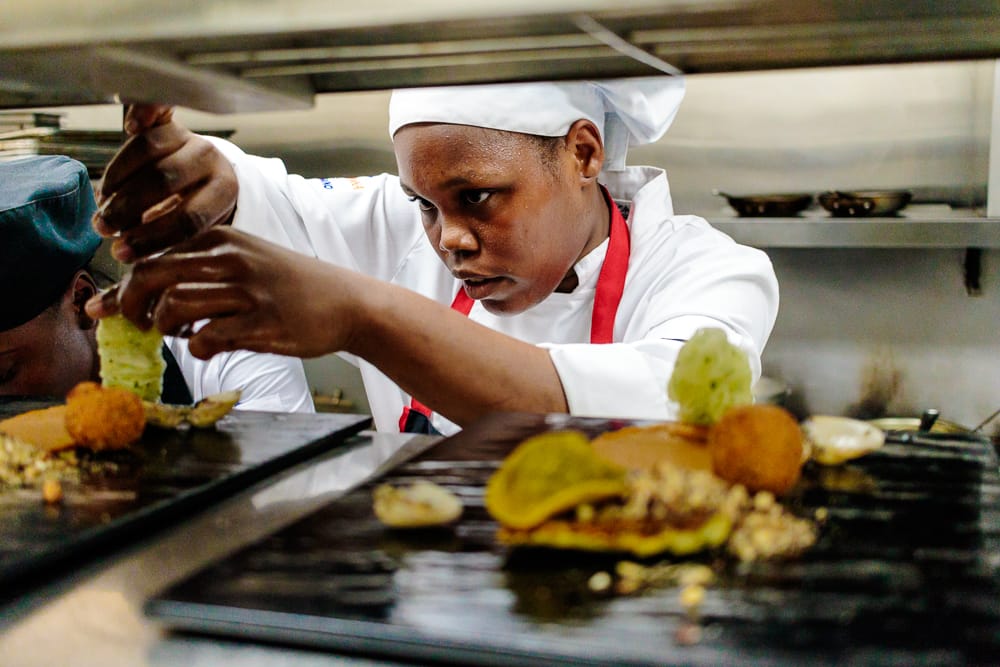
Watching from both in front (as host) and behind the cameras became one of the most fascinating observations of my career. Many of the dishes were technically excellent. Most of the contestants clearly knew how to cook.
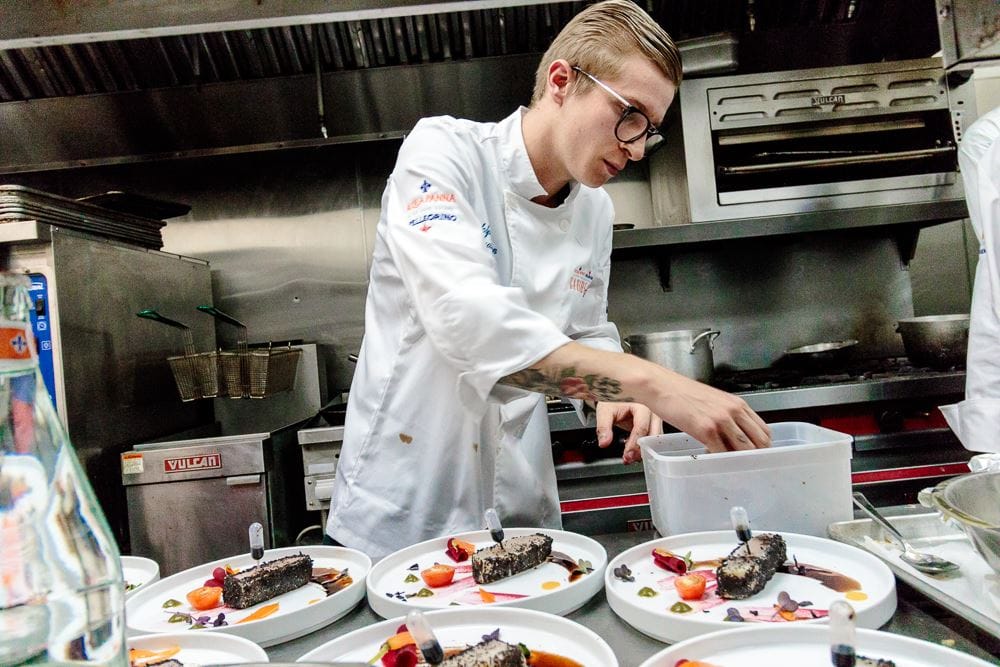
These were our finalists. The top 5 out of many applicants. The presentations were beautiful. Each of the chefs had an entirely different way of interpreting and presenting their creation.
Some chefs tried to demonstrate everything they knew. Others trusted one simple idea and executed it exceptionally well. Both required skill. Only one consistently created the strongest emotional response. That's when I realised something. This wasn't really about cooking.
It was about clarity.
The winning dishes weren't necessarily the most complex. They were the easiest to understand. That is exactly what happens in expert positioning.
That one plate with a unique and easy-on-the-palette signature that changed the conversation in the room. That made our production team lean in with a big smile that we all understood meant "we have found the one."
Which made me wonder... What were the judges actually recognising?

For years, I couldn't let go of that question. Why did one dish create an emotional response while another, equally well executed, did not? It certainly wasn't because the winning chef had access to better ingredients, more time, or greater opportunity.
Every finalist had already demonstrated exceptional technical ability simply by reaching the competition. So what exactly separated them? The more I reflected on that experience, the more I realised I had seen the same competition somewhere else.
Not in kitchens but in boardrooms, client presentations, inside proposal meetings, interviews, keynote speeches. Everywhere exceptional people were being chosen. And it was clear that also experts can find themselves trying so hard to demonstrate everything they knew that the very thing which made them exceptional became difficult to recognise.
I began seeing the same pattern everywhere. Experts with remarkable credentials struggling to explain why they kept being compared. Others, equally qualified, becoming the obvious choice almost effortlessly. The difference wasn't intelligence, technical ability or experience.
It was something far more difficult to describe. And once I started noticing it, I couldn't stop seeing it. They would say things like "I don't want to price myself out of the market." While often their competitors are earning 10x more.
Like the winning chefs, these high-earning experts rarely appeared to be trying harder than everyone else. They didn't appear to be working harder. They weren't trying to be everywhere. Yet people understood their value more quickly. What they did better was communicate value more clearly and faster.
We've Been Looking At Expertise The Wrong Way
For decades, we assumed the greatest advantage was having more knowledge. Another qualification or specialization. That logic made perfect sense when information itself was scarce.
Today, technology is quietly challenging that assumption. Not because expertise no longer matters. But because expertise alone no longer explains why people choose one expert over another.
There is another pattern at work. One that most professionals experience throughout their careers without ever being taught to master it. You go to university to master your profession. You learn how to diagnose, design, and advise.
But almost no one teaches you how to recognise and communicate the unique way you create value. The thing clients instinctively respond to before they can even explain why. How value becomes recognised. Why two equally qualified experts can walk into the same room and leave with completely different outcomes.
It became an obsession over the last two decades of my career; it became the foundation of the Brand IT Factor® assessment, a framework designed to help experts uncover the hidden patterns that have quietly influenced every opportunity, every promotion, every client decision, and every "yes" or "no" throughout their careers.
Because once you can recognise that pattern yourself, something remarkable begins to happen. Other people start recognising it too. Download the free prospectus to IRREPLACEABLE to learn more.
If you've ever wondered why equally qualified experts experience dramatically different careers, the Irreplaceable™ Prospectus explores the hidden patterns behind becoming the expert people instinctively choose.
CLICK HERE TO DOWNLOAD THE PROSPECTUS